
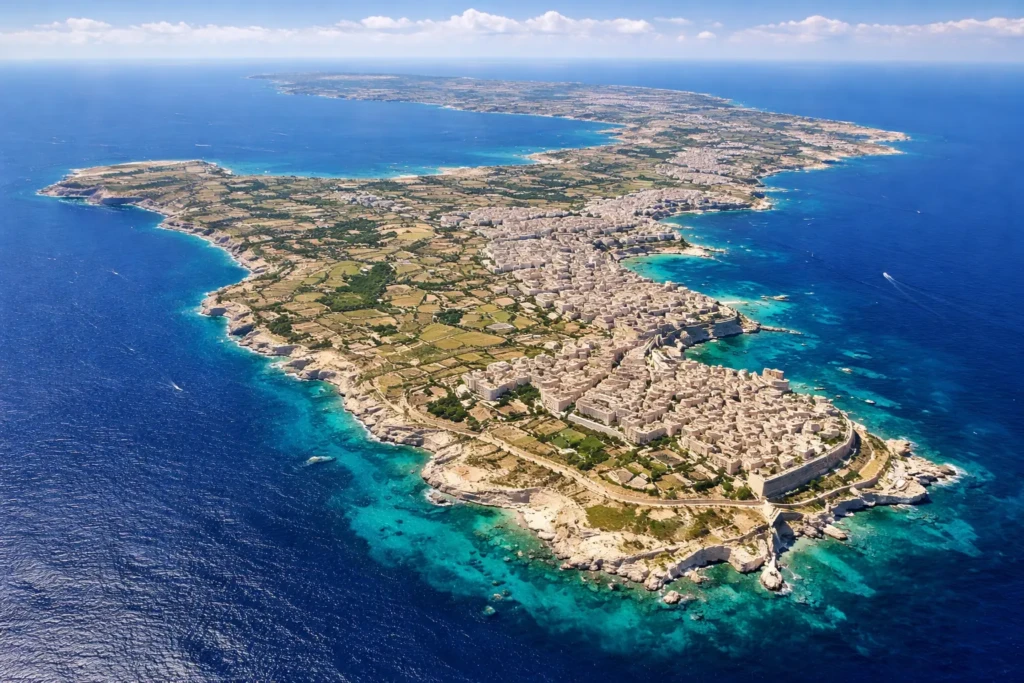
Why island nations command attention
Island countries fascinate people because they operate under limits. They face isolation. They face resource constraints. Despite this, many thrive. Geography forces them to think strategically. Survival depends on planning, cooperation, and adaptability.
Their success proves strategy matters more than size. These nations show how identity, culture, and smart policy can overcome physical limits.
Below are ten small island nations that demonstrate resilience and identity.
1. Malta
Malta sits at a historic crossroads. Trade shaped its identity for centuries. Empires passed through its ports. Each left cultural traces. Architecture reflects layered influence. Language blends roots from different regions.
Today, Malta thrives through tourism and digital services. It attracts startups and remote workers. Government policies support innovation. Despite limited land, Malta leverages location, history, and regulation to stay relevant in modern Europe.
2. Iceland
Iceland uses renewable energy extensively. Geothermal power heats homes. Hydropower fuels industry. This reduces dependence on imports. Sustainability shapes national thinking.
Creativity thrives there. Music, literature, and design hold strong cultural value. Art and innovation coexist naturally. The population values independence and resilience. Harsh environments shaped mental toughness. Iceland proves environmental limits can inspire innovation rather than restrict progress.
3. Singapore
Singapore demonstrates precision at every level. Planning defines its growth. Infrastructure supports efficiency. Systems operate with discipline and clarity.
Policy supports long-term development. Education drives competitiveness from an early age. The nation invests heavily in talent. Despite minimal land and resources, Singapore became a global hub. It proves leadership and execution matter more than geography.
4. Cyprus
Cyprus bridges continents. Its location connects Europe, Asia, and the Middle East. This position shapes trade and culture. History reflects constant exchange.
It balances tradition and commerce carefully. Tourism supports economic stability. Financial services add resilience. Despite political challenges, Cyprus continues adapting. The island shows how geography can create opportunity even under tension.
5. Barbados
Barbados invests heavily in education. Literacy rates remain high. Human capital drives development. Strong institutions support stability.
The country maintains political continuity. This builds investor confidence. Culture blends heritage and modernity. Music, sport, and community remain central. Barbados proves social investment strengthens long-term national performance.
6. Fiji
Fiji centers community in daily life. Family and tradition guide decisions. Cultural respect shapes leadership styles.
Tourism supports livelihoods across islands. Agriculture also plays a role. Despite vulnerability to climate events, Fiji continues adapting. The nation balances economic needs with cultural preservation. Resilience defines its identity.
7. Maldives
The Maldives depends heavily on sustainability. Rising sea levels create urgency. Environmental protection drives policy decisions.
Tourism shapes infrastructure and employment. The country invests in eco-conscious development. Innovation focuses on survival. The Maldives highlights how climate pressure forces long-term thinking and global cooperation.
8. Seychelles
Seychelles protects ecosystems aggressively. Marine conservation remains a priority. Biodiversity shapes national strategy.
Tourism aligns with environmental care. Policies limit overdevelopment. This balance preserves long-term value. Seychelles shows how conservation can coexist with economic growth when planning stays disciplined.
9. Bahamas
The Bahamas thrives through maritime routes. Its location supports global travel and shipping. Tourism fuels growth across islands.
Financial services add diversification. Global connectivity matters deeply. Despite hurricane risks, the nation continues rebuilding and adapting. The Bahamas proves recovery and planning define resilience.
10. Samoa
Samoa preserves tradition with intention. Customary practices guide leadership. Community defines authority.
Culture shapes national identity strongly. Modern systems coexist with ancestral values. Despite distance from major markets, Samoa maintains cohesion. The nation shows how cultural continuity strengthens resilience.
Final thoughts
Small island nations prove limitation fuels creativity. Pressure forces clarity. Identity drives resilience. Strategy outweighs size. Influence grows from purpose, not landmass.